
28
2017
-
04
Real-world studies once again prove that Huaiqihuang Granules are effective in treating childhood asthma
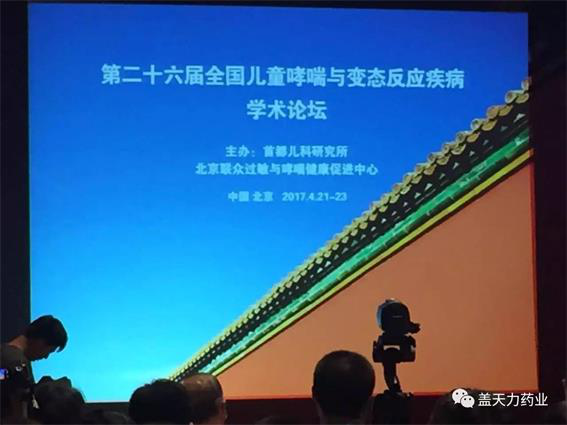
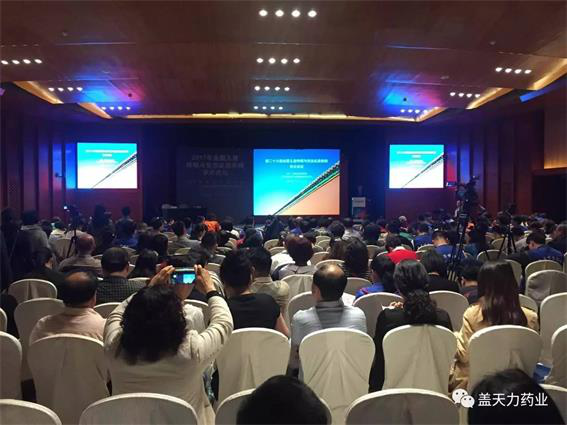
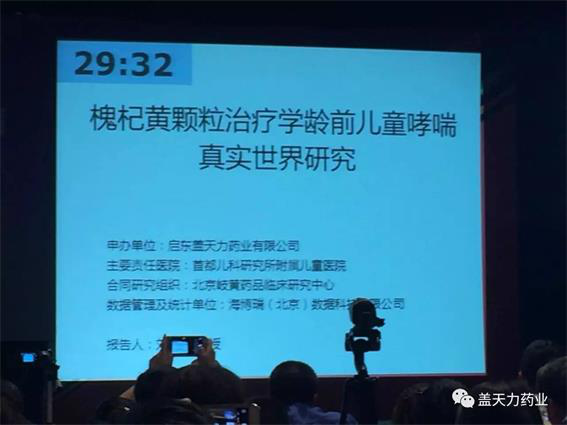
On April 22, 2017, at the 26th National Academic Forum on Childhood Asthma and Allergy Diseases held in Beijing, Professor Liu Chuanhe, the main researcher from the Children's Hospital of the Capital Institute of Pediatrics, released the "Huaiqihuang Granules for the Treatment of Childhood Bronchial Asthma" The latest statistical analysis results of the effectiveness of real-world research.
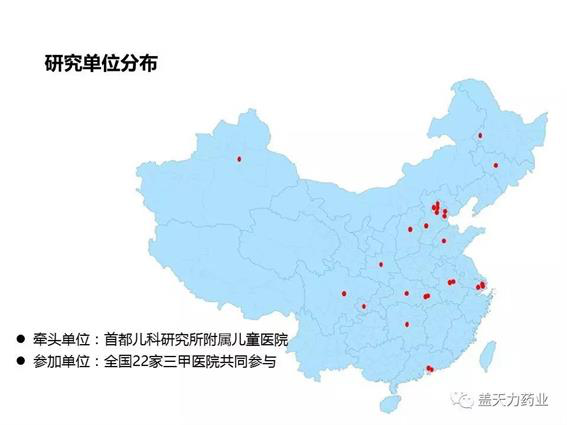
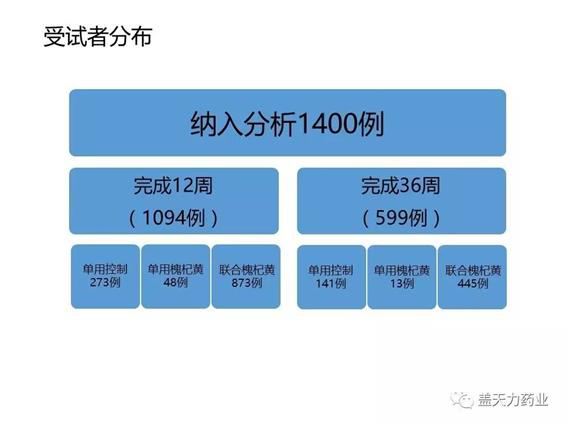
A real-world study on the effectiveness of Huaiqihuang Granules in the treatment of bronchial asthma in children has been conducted by 22 centers nationwide, with 3000 cases expected to be enrolled and 1850 cases have been enrolled since its inception. This statistics is based on 1400 patients who have been included in EDC system.
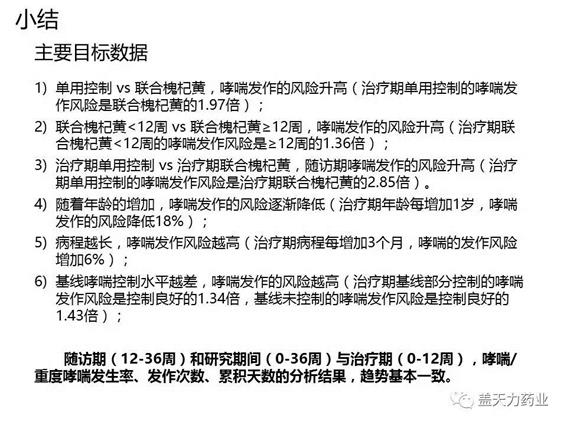
According to the statistical results of the number of asthma attacks in the main target data, among the patients who completed the 12-week follow-up, the number of attacks treated with Huaiqihuang granules alone, combined with Huaiqihuang granules and GINA regimen, and controlled drugs alone were 0.04, 0.11 and 0.21 respectively. The effect of using Huaiqihuang alone was significantly better than that of the other two groups, and the risk of asthma attack was 1.97 times higher than that of using Huaiqihuang alone.
Under different medication cycles of Huai Qi Huang, the number of asthma attacks with single control drugs is 0.21, that with single use of Huai Qi Huang (<12 weeks) is 0.06, that with combination of Huai Qi Huang (<12 weeks) is 0.12, and that with combination of Huai Qi Huang (>= 12 weeks) is 0.09, indicating that the longer the course of treatment with Huai Qi Huang, the lower the risk of asthma attacks.
Other statistical results: the risk of asthma attack during the treatment period is increased by using control alone vs Huaiqi Huang during the treatment period (the risk of asthma attack during the treatment period is 2.85 times higher than that of Huaiqi Huang during the treatment period); With the increase of age, the risk of asthma attack gradually decreases (the risk of asthma attack decreases by 18% for every 1 year of age increase during the treatment period); The longer the course of disease, the higher the risk of asthma attack (6% increased risk of asthma attack for each 3-month increase in duration of treatment).
The results of this statistics are fully consistent with the trend shown in the first statistics at the mid-term meeting. As the number of patients enrolled continues to increase, more exciting and more convincing results come.
More news



Address
1166 West Nanyuan Road, Qidong Economic Development Zone, Jiangsu Province
Telephone

Mobile website

Public Number
Copyright © 2024 Qidong Gaitianli Pharmaceutical Co., Ltd.